Ingredients
Explore all the little things that make our recipes tasty.
unsalted beef stock
Sauce
Unsalted beef stock is a rich, savory liquid made from simmering beef bones and meat with vegetables (like carrots, celery, onion) and herbs, but without any added salt, allowing cooks complete control over seasoning in dishes like soups, stews, gravies, and sauces. It provides a deep beef flavor base and often contains natural seasonings (like pepper, thyme) but no MSG or artificial flavors, making it a healthy, versatile cooking ingredient. Key Characteristics: No Added Salt: The defining feature, letting you adjust saltiness to your recipe. Rich Flavor: A concentrated beef taste from slow simmering. Versatile Base: A foundation for many recipes, unlike broth (meat-based) which is often eaten alone. Often Includes Veggies/Herbs: Contains natural flavor enhancers like onion, carrot, celery, bay leaf, and thyme, but no excess sodium. How It's Used: Flavor Foundation: Adds depth to rice dishes, gravies, and braises. Reheating: Adds moisture and flavor back to leftovers. Ingredient Control: Ideal for low-sodium diets or recipes where you want to manage salt content precisely.

unsalted butter
We don't have a description for this ingredient yet.

unsalted pistachio
Nut
An unsalted pistachio is a pistachio nut that has no salt added during processing. It can be either raw or roasted, and is prized for its natural, savory flavor and lower sodium content compared to salted varieties. These nuts are a versatile ingredient that can be enjoyed on their own or added to various dishes like salads, yogurt, and desserts. Characteristics of unsalted pistachios No added salt: This is the primary difference from regular pistachios; they contain very little or no added sodium. Natural flavor: They have a pure, nutty taste that allows their natural flavor to come through without the enhancement of salt. Versatile: They can be eaten as a snack or used in both sweet and savory dishes, such as for topping salads, yogurt, and ice cream, or in baking. Health benefits: They are a good source of nutrients like fiber, protein, and healthy fats, which can contribute to feelings of fullness and overall health. Variety: They are available in both raw and roasted forms, with different options for shelled or in-shell nuts.

unsweetened cocoa
Seasoning
Unsweetened cocoa powder is made from dried cocoa bean solids with the cocoa butter removed and no sugar or other ingredients added. It has a naturally bitter, intense chocolate flavor and is a common baking ingredient, though it is not typically eaten on its own and needs a sweetener to be palatable. It's available in two main types: natural, which is more acidic and lighter in color, and Dutch-processed, which is treated to be milder and darker.

unsweetened coconut milk
Drink
Unsweet Coconutmilk | Silk®Unsweetened coconut milk is a dairy-free, plant-based milk made from pressing coconut meat with water, containing no added sugars, and offering a pure, versatile, and slightly creamy liquid with natural coconut flavor, often fortified with vitamins like D and B12, and used in cooking, smoothies, coffee, and cereals. It's a healthier alternative to sweetened versions, focusing on natural ingredients like coconut, water, and sometimes a little salt or rice for texture. Key Characteristics No Added Sugar: The defining feature, making it low in sugar and calories. Dairy-Free: A popular substitute for cow's milk, suitable for vegans and those with lactose intolerance. Versatile: Used in both sweet and savory dishes, from curries to smoothies. Fortified: Many brands add calcium, Vitamin D, and Vitamin B12 for enhanced nutrition. Ingredients: Typically contains coconut milk (coconut cream + water) and water, sometimes with a pinch of salt or rice. Types & Formats Carton (Beverage): Thinner, lighter, and found in dairy aisles, great for drinking and cereal. Canned (Culinary): Thicker, richer, used for cooking; available in full-fat or light versions. Added Extras: Check labels for added stabilizers, gums, or sweeteners in some brands, though pure versions exist. How to Use Drinks: Coffee, tea, smoothies, protein shakes. Cooking: Curries, soups, sauces, baked goods (check fat content for baking). Breakfast: Cereal, oatmeal, granola.

unwaxed lemon
Fruit
Unwaxed lemons are lemons without a wax coating, making them ideal for using the zest, as they are often sold for both cooking and vegan purposes. While they are free of the artificial wax, they may have a natural fungicide coating for preservation, so it's important to wash them thoroughly before use. You can find unwaxed lemons at most grocery stores, often labeled as organic or specifically marketed as "unwaxed". Benefits and uses Edible zest: The peel can be used for zesting in recipes for cakes, biscuits, and other dishes. Suitable for vegans: Since there is no wax coating, they are suitable for vegan recipes. Versatile cooking: They are a staple for adding a bright, tangy flavor to marinades, dressings, roasted meat, fish, and sauces. Garnish: They make a refreshing garnish for drinks.

unwaxed lime
Fruit
Unwaxed lime is a lime that has not been coated with a protective wax or other post-harvest treatment. This makes the peel safe to use for cooking, zesting, and garnishes, as there is no waxy film to wash off first. Unwaxed limes are ideal for recipes where the peel is used, such as in baking, marinades, dressings, or cocktails. No protective coating: Unlike some other citrus fruits that are coated to extend shelf life, unwaxed limes are treated to be ready for immediate use of both the juice and peel. Safe for peel use: You can safely zest, grate, or use the peel for cooking or as a garnish because it does not have the artificial coating. Ideal for cooking and drinks: Unwaxed limes are a perfect choice for a wide variety of recipes that call for both the juice and the zest, like salad dressings, marinades, cocktails, and baked goods.

vanilla
We don't have a description for this ingredient yet.

vanilla bean paste
Sauce
All About Trader Joe's Vanilla Extracts and Pastes - The ...Vanilla bean paste is a thick, viscous ingredient made from a blend of vanilla extract, ground vanilla beans, and a sugar-based syrup, often containing thickeners. It offers the intense flavor of vanilla extract and the visual appeal of vanilla bean seeds, providing a convenient alternative to using whole vanilla pods. You can typically substitute vanilla bean paste for vanilla extract in a 1:1 ratio in recipes. What it is Thick syrup: It has a consistency similar to honey or maple syrup. Vanilla seeds: It contains specks from real vanilla beans, which add visual appeal to dishes. Concentrated flavor: It is made with vanilla extract and ground beans, creating a rich and robust vanilla flavor. Convenient: It allows bakers to get the flavor and appearance of vanilla beans without the time-consuming task of scraping them out of a pod. How to use it Substitution: Use vanilla bean paste as a 1:1 substitute for vanilla extract in most recipes. Best for: It is excellent for recipes where you want the visual appeal of seeds, such as vanilla ice cream, cakes, cookies, and frosting. Versatile: It can also be added to beverages like coffee or yogurt for flavor.

vanilla extract
We don't have a description for this ingredient yet.

vanilla pod
Fruit
A vanilla pod is the fruit of the vanilla orchid, a long, dark, and wrinkled bean that contains thousands of tiny seeds. It is a prized ingredient for its sweet, fragrant flavor, which is created through a labor-intensive, multi-step curing process that transforms the green, unscented pods into the aromatic spice used in baking and cooking.

vanilla sugar
Fat
Vanilla sugar is granulated sugar that has been infused with vanilla beans or extract, creating a sweet and aromatic sweetener for baking and desserts. It is very common in Europe and can be made at home by adding a vanilla bean pod to a jar of sugar for several weeks. How it's made Using whole beans: Place one or two vanilla bean pods (fresh or dried, with seeds scraped out) into an airtight jar with a few cups of granulated sugar. Seal the jar and let it sit for at least two weeks to infuse. The sugar can be used as needed, and the jar can be refilled with fresh sugar as it runs low. Using extract: Infuse sugar with vanilla extract by mixing the extract into the sugar until combined. How to use it Baking: Use it in place of regular sugar in cakes, cookies, and other baked goods for a subtle vanilla flavor. Finishing: Sprinkle it on top of pancakes, porridge, or pastries as a garnish. Beverages: Stir a pinch into coffee or hot chocolate. Key differences from vanilla extract Vanilla sugar is a dry ingredient, while vanilla extract is a liquid. Vanilla sugar is less common in the United States and United Kingdom compared to Europe.

västerbottensost cheese
Cheese
Västerbottensost is a famously unique, hard Swedish cheese known for its intense, complex, and somewhat mysterious flavor. Produced exclusively at a single dairy in the village of Burträsk in northern Sweden, it is often called the "king of Swedish cheeses". Flavor and texture Västerbottensost is instantly recognizable in a blind taste test because of its distinctive combination of tastes and textures. Flavor profile: It features a rich, complex flavor with a balance of sweetness, saltiness, and bitterness. It also has hints of truffles, caramel, and umami, which is often described as nutty and fruity. Texture: It has a firm, granular, and brittle texture, with tiny holes, similar to a mix between Cheddar and Parmesan. As it ages, small crunchy crystals can also be found throughout the cheese. Appearance: Västerbottensost is a pale yellow, full-fat cow's milk cheese aged for at least 14 months. History and mystery The creation of Västerbottensost is steeped in a local legend that adds to its mystique. Accidental discovery: The cheese was first created in 1872 at the Burträsk dairy by a dairymaid named Ulrika Eleonora Lindström. According to the story, she was distracted by a suitor and let the curdling process get interrupted and reheated several times, resulting in a unique, happy accident. Secret recipe: The precise recipe has been a closely guarded secret ever since and is only known to a select few cheesemakers. The Burträsk secret: The cheese's unique taste cannot be replicated anywhere else, even when using the same recipe and equipment. The exact reason remains unknown, but it is believed to be connected to the special flora, or bacteria, present only in the Burträsk dairy. Uses and traditions Västerbottensost is a Swedish national treasure and a staple of Swedish cuisine, particularly for special occasions. Culinary staple: It is a must-have for traditional Swedish holidays, including Christmas, Easter, and Midsummer. Versatile ingredient: While often enjoyed on its own with crackers or fruit, its strong, characteristic flavor also makes it an ideal ingredient for cooking. Västerbotten cheese pie: A classic Swedish dish is the västerbottensostpaj, or Västerbotten cheese pie, which is especially popular at crayfish parties. Fine dining: The cheese has been served at high-profile events, including Nobel Prize dinners and royal weddings.

veal
We don't have a description for this ingredient yet.

vegan butter
We don't have a description for this ingredient yet.

vegan white wine vinegar
Dressing
Vegan white wine vinegar is a type of white wine vinegar that is made without any animal-derived products in its production process, which is standard for most white wine vinegars. The vinegar is made by a two-step fermentation of white wine, first converting the grape juice into alcohol and then turning the alcohol into acetic acid using bacteria. Since no animal products are used, white wine vinegar is inherently suitable for vegans, though it's always good to check the label for any added non-vegan ingredients. Production process First fermentation: The process starts with crushing grapes and using yeast to convert their sugars into alcohol, creating the base wine. Second fermentation: Bacteria, such as Acetobacter, are used to convert the alcohol in the wine into acetic acid, which gives the vinegar its characteristic sour taste. Vegan-friendly: This entire process relies on microorganisms and does not require any animal products, making white wine vinegar a naturally vegan-friendly option. What to check for Ingredients: While the vinegar itself is vegan, some flavored or specialty vinegars might have added ingredients. Always check the label to ensure no non-vegan additives are present. Fining agents: Some wines use animal-based fining agents (like egg whites or milk proteins) during the initial wine-making process, but these are typically removed before the wine is converted to vinegar. However, some manufacturers may choose to use non-vegan-certified wine or processes. Other additives: Some products may have added sugars or artificial colorings, though many are also free from these.

vegetable oil
We don't have a description for this ingredient yet.
vegetable shortening
Root Vegetable
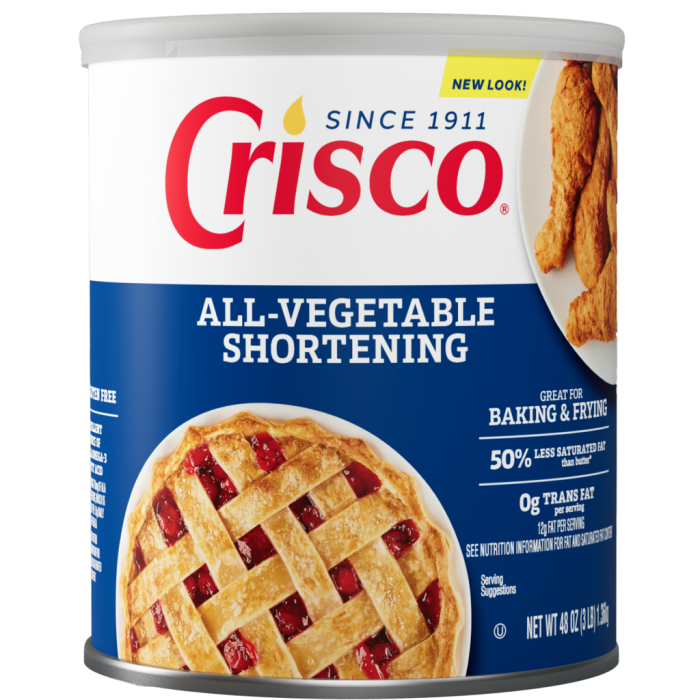
"Shortening cubed" refers to the state of solid vegetable shortening that has been cut into cubes, a common step in preparing it for baking recipes like pie crusts or biscuits. The process of cutting shortening into cubes and mixing it with flour helps create the "short" texture in baked goods, which is crumbly and flaky because the fat prevents long gluten strands from forming. How "shortening cubed" is used in baking Purpose: Cubing shortening is part of the process of incorporating it into dry ingredients to make a "short" dough. Method: You would cut the shortening into cubes and then, using a pastry blender, your fingers, or a food processor, cut the cubes into the flour until they reach the desired size. Texture: The final texture of the baked good depends on the size of the shortening pieces. Pea-sized pieces: Lead to a flakier result, ideal for pie crusts. Coarse grain size: Leads to a crumblier texture, like a streusel. What is shortening? Composition: Shortening is a solid fat made from vegetable oil that has been hydrogenated to become solid at room temperature. Function: It is used in baking to make baked goods tender, flaky, and soft. Characteristics: It has a neutral flavor and a higher melting point than butter, which helps baked goods maintain their shape and rise higher.

vegetable stock
We don't have a description for this ingredient yet.

vegetable stock cube
We don't have a description for this ingredient yet.

vermicelli pasta
We don't have a description for this ingredient yet.

vermicelli rice noodles
Pasta
Vermicelli rice noodles are very thin noodles made from rice flour and water, commonly used in East and Southeast Asian cuisine. They are delicate, absorb flavors well, and can be used in a variety of dishes like soups, salads, and stir-fries. They should not be confused with Italian-style vermicelli pasta or with cellophane noodles (glass noodles), which are made from starches like mung bean.

vinaigrette dressing
We don't have a description for this ingredient yet.

vine leaves
We don't have a description for this ingredient yet.