Ingredients
Explore all the little things that make our recipes tasty.
seasoned rice vinegar
Dressing
Seasoned rice vinegar is regular rice vinegar that has been mixed with added sugar and salt, giving it a sweeter, more balanced flavor than unseasoned versions. It is a convenient condiment used to enhance dishes with a mix of sweet, salty, and tangy notes, and is commonly used for sushi rice, salad dressings, and dipping sauces. Key characteristics Added ingredients: It is a blend of rice vinegar with added sugar and salt, and sometimes includes sake or MSG. Flavor profile: The additions create a sweeter, more balanced, and less sharp taste compared to plain rice vinegar. Uses: It is frequently used in cooking for sushi rice (also called sushizu), salad dressings, marinades, and as a dipping sauce for dumplings. Convenience: Its convenience comes from being pre-seasoned, which saves the time of making your own mixture of sugar and salt for certain recipes. How to choose and use Seasoned vs. unseasoned: Use seasoned rice vinegar when a recipe calls for added sweetness or when you want to make a quick, balanced dressing or sauce. Choose unseasoned rice vinegar if you prefer to control the exact amount of sugar and salt yourself. Substitution: You can substitute it for unseasoned rice vinegar in a recipe, but the final dish will have a slightly sweeter and saltier result. Making your own: You can easily make your own seasoned rice vinegar by heating regular rice vinegar with sugar and salt until dissolved, then letting it cool.

seasoning
Seasoning
Seasoning is any substance, like salt, herbs, or spices, added to food to enhance or improve its flavor. It is a crucial step in cooking that can amplify a dish's natural tastes, add complexity, and balance flavors. Common types of seasonings Salt: A fundamental seasoning that can intensify other flavors and is also used to tenderize meats. Herbs: Aromatic plants, fresh or dried, that add specific flavor profiles (e.g., basil for Italian food, rosemary for meat). Spices: Flavorful parts of plants, such as seeds, bark, or roots, often ground (e.g., pepper, paprika, cumin). Acids: Ingredients like lemon juice or vinegar that add a bright, tangy flavor to balance richness. Sweeteners: Sugar or honey that can be used to enhance other flavors or create a sweet-and-savory profile. Infused Oils: Oils that have been flavored with ingredients like garlic or herbs, often used in pasta or salads. Why seasoning is important Enhances flavor: Seasonings can bring out and amplify the natural taste of food. Balances tastes: Ingredients like salt, sugar, and acids work together to create a more balanced and complete flavor profile. Adds complexity: Using different herbs and spices can introduce a wide range of flavors and aromas, making a dish more interesting.

self-raising flour
We don't have a description for this ingredient yet.

semi-skimmed milk
We don't have a description for this ingredient yet.

semolina
Fruit
All About Semolina Flour - Differences Between Semolina and ...Semolina is a coarse, pale-yellow flour made from hard durum wheat. It is high in protein and gluten, making it ideal for making pasta, pizza, and bread. It can also be used to make puddings and other dishes. Key characteristics Source: Durum wheat, a hard, high-protein wheat. Appearance: Coarse, pale-yellow flour. Gluten content: High, which gives it strength and elasticity. Flavor: Mild and earthy. Common uses Pasta: It is the traditional flour for making pasta, including spaghetti. Bread: Used in baking for bread, pizza dough, and biscuits. Puddings: In British cuisine, the term "semolina" can also refer to a sweet, creamy pudding made by cooking the flour in milk. Other dishes: Used in recipes for couscous, gnocchi, and flatbreads like batbout. What to know Semolina vs. other flours: Semolina is made from a different type of wheat than all-purpose flour, resulting in a different texture and protein content. Dietary considerations: Because it is made from wheat, semolina is not gluten-free and is unsuitable for people with gluten disorders or wheat allergies.

semolina flour
Grain
Semolina flour is a coarse, pale-yellow flour made from grinding durum wheat, a hard type of wheat known for its high protein and gluten content. Its high gluten content makes it ideal for creating structured foods like pasta, pizza dough, and bread, and it also has uses in couscous, puddings, and cakes. What it is Made from durum wheat: Semolina is specifically made from durum wheat, which is a hard, high-protein wheat variety. Coarse texture: It is ground more coarsely than all-purpose flour, giving it a texture that can be compared to cornmeal. High in gluten: The high gluten content is a key feature, giving elasticity to dough and providing structure to baked goods. Golden color: It has a pale yellow or golden color due to the durum wheat it's made from. Common uses Pasta: Semolina is the traditional flour used to make dried Italian pasta. Bread and pizza: It's used in many breads and pizza doughs because its high gluten content provides a good structure and chewiness. Couscous: It is the primary ingredient for making couscous. Puddings and porridges: It can be cooked with liquid to create a hot cereal or pudding, according to WebstaurantStore and Healthline. Important note Not gluten-free: Because it is made from wheat, semolina flour contains gluten and is not suitable for those with celiac disease or a gluten intolerance.
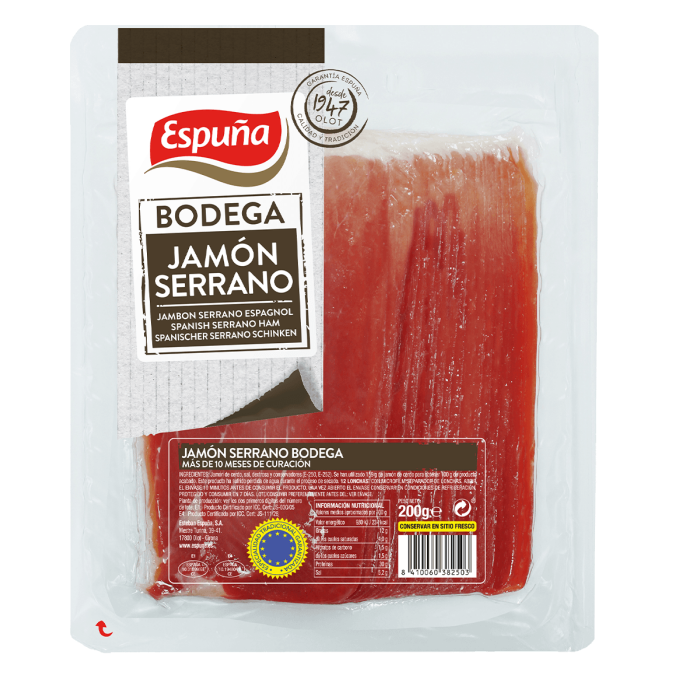
serrano ham
Meat
Serrano ham is a traditional Spanish dry-cured ham made from the hind leg of white pigs, known for its subtle flavor and often aged for a minimum of 12 months. The name "Serrano" comes from the Spanish word for "mountain" (sierra), referencing the high-altitude regions where it was traditionally cured in cooler air. This air-drying and slow-curing process, which includes salting and maturing for an extended period, develops its distinctive flavor. Key characteristics Origin: Spain, from specially selected breeds of white pigs like Landrace or Duroc. Curing process: The ham is cured with sea salt and then air-dried in a process that can last anywhere from 12 to over 48 months, depending on the quality grade. Flavor and texture: It has a distinct, yet mild and savory flavor. The longer it is cured, the more concentrated and complex the flavor becomes. Appearance: The meat is typically a shade of pink with marbling, and the fat is tender. Uses: Served thinly sliced on its own, with olives, bread, or melon, and is also used in cooked dishes like croquettes or to wrap other meats. How it compares to Iberico ham Serrano ham: Made from white pig breeds, it has a milder flavor and a less complex taste profile compared to Iberico. Iberico ham: Made from the unique black Iberian pig breed, which often gives it a more intense, nutty flavor and a richer, more marbled texture.

sesame seed
We don't have a description for this ingredient yet.

sesame seed burger buns
Bread
A bun is a small, sometimes sweet, bread-based item or roll. Though they come in many shapes and sizes, they are most commonly hand-sized or smaller, with a round top and flat bottom. Buns are usually made from flour, sugar, milk, yeast and butter.

sesame seed oil
We don't have a description for this ingredient yet.

sevaiiya
Pasta
Sevaiiya is a phonetic spelling of seviyan, a type of fine, roasted vermicelli used to make both sweet and savory dishes in Indian cuisine. The terms are often used interchangeably, along with semiya and sevai.

shallots
We don't have a description for this ingredient yet.
shaoxing wine
Drink
Shaoxing wine (紹興酒) is a famous Chinese rice wine from Shaoxing, made from fermented glutinous rice, water, and wheat-based yeast, used for both drinking and cooking to add deep, complex, slightly sweet, and savory flavors to dishes like stir-fries, marinades, and braises, providing authentic restaurant taste. It's a key ingredient in Chinese cuisine, acting similarly to sherry or sake but with its unique profile, balancing fats and salt, and is known for its amber color and strong aroma. Key Characteristics & Uses: Origin: Shaoxing, Zhejiang Province, China, with over 2000 years of history. Ingredients: Glutinous rice, water, and a wheat-based yeast (koji). Flavor Profile: Complex, nutty, slightly sweet, with a savory depth and sharp finish, but can be harsh when drunk straight due to added salt in cooking versions. Uses: Essential for marinades (drunken chicken), sauces, braised dishes, and stir-fries, adding umami and balancing flavors. Types: Comes in various grades, from dry (Yuan Hong) to sweet (Shaoxing). Gluten: Contains wheat, so not gluten-free. Substitutes: Dry sherry, sake, or Chinese mirin (less sweet) can be used in a pinch, but won't replicate the exact flavor.

shelled hazelnuts
Nut
A shelled hazelnut is the nut's edible kernel that has been removed from its hard outer shell. It is sold without the shell for convenience and can be eaten raw, roasted, or used in cooking and baking. The thin, dark skin is sometimes removed before eating because it can have a slightly bitter taste. What it is: The sweet, creamy-colored kernel of the hazelnut, separated from its smooth, brown shell. Why it's sold shelled: For convenience, making it ready to eat or use immediately in various dishes. How it's used: It can be enjoyed raw, roasted to enhance its flavor, or used in a wide range of recipes, from snacks to baked goods and savory dishes. Additional information: Some people prefer to remove the thin, dark skin after roasting by rubbing the nuts together, as the skin is mildly bitter.

sherry
Wine
Sherry is a fortified wine made from white grapes that are grown near the city of Jerez de la Frontera in Andalusia, Spain.

sherry vinegar
Dressing
Sherry vinegar is a type of vinegar from Spain, made from sherry wine, and aged in oak barrels. It has a rich, complex flavor with nutty and sweet notes, and its quality varies based on its aging period, with minimums of six months for basic vinagre de Jerez, two years for Reserva, and ten years for Gran Reserva. It is used in Spanish and other cuisines for dressings, sauces, and marinades. Production and characteristics Origin: It is produced in the "sherry triangle" region of the Spanish province of Cádiz. Ingredients: It is made from sherry wine, primarily from the Palomino grape, but also from sweeter varieties like Pedro Ximénez or Moscatel. Aging: The vinegar is aged in American oak barrels using a solera system, where older and younger vinegars are blended. Flavor and color: It has a pale-golden to dark amber color and a complex, nutty, and slightly sweet flavor profile. Regulation: Authentic sherry vinegar is protected by a Protected Designation of Origin (PDO) that regulates its production and aging process. Grades of sherry vinegar Vinagre de Jerez: Minimum of six months aging in wood. Reserva: Minimum of two years aging in wood. Gran Reserva: Minimum of ten years aging in wood. Culinary uses Salad dressings: It is a popular base for vinaigrettes. Sauces: It adds a tangy and complex flavor to sauces like romesco and salsa verde. Marinades: It can be used to marinate meats or vegetables. Finishing touch: Just a few drops can brighten the flavor of a finished dish.

shiitake mushrooms
We don't have a description for this ingredient yet.

shortcrust pastry
Pastry
We don't have a description for this ingredient yet.

shortening
Fat
Shortening is any fat that is a solid at room temperature and used to make crumbly pastry and other food products. Although butter is solid at room temperature and is frequently used in making pastry, the term "shortening" seldom refers to butter, but is more closely related to margarine.

shredded coconut
Fruit
Shredded coconut is the white flesh of a mature coconut, which has been finely grated into thin, flexible strips. It is a versatile ingredient used in both sweet and savory dishes for adding flavor and chewy texture. The product can be found in sweetened or unsweetened varieties, with the unsweetened version being suitable for savory applications and the sweetened one being best for desserts.

shredded meat
Meat
Shredded meat is meat that has been cooked until very tender and then pulled or cut into small, thin strips. This preparation makes the meat moist, easy to eat, and excellent for absorbing sauces. It is often made by slow-cooking cuts like chuck roast or brisket until they fall apart easily. How it's made Slow cooking: A suitable cut of meat, such as a beef chuck roast or brisket, is slow-cooked in a pot, slow cooker, or oven for several hours until it becomes extremely tender. Pulling: Once cooked, the meat is removed and easily pulled apart into strands using two forks. The term "pulled" is sometimes used specifically for pork, but the methods are similar. Shredding: Alternatively, the meat can be cut into pieces with forks or knives after cooking. Alternative method: A stand mixer can also be used on a low speed to shred the meat quickly and efficiently, especially if the meat is already tender from braising. Why it's a popular cooking method Tender and moist: Slow cooking breaks down connective tissue, resulting in a very tender and juicy texture. Absorbs flavor: Shredding the meat creates more surface area, which allows it to absorb sauces and seasonings more effectively. Versatility: Shredded meat can be used in a wide variety of dishes, from tacos and sandwiches to pasta and curries.

shredded mexican cheese
We don't have a description for this ingredient yet.

shredded monterey jack cheese
We don't have a description for this ingredient yet.

shrimp
Fish
Shrimp is a small, free-swimming crustacean with a long, muscular abdomen, long antennae, and 10 legs, often harvested for food. It is a popular type of seafood that lives in both salt and freshwater environments and is valued for its sweet, firm texture and versatility in cooking. The terms "shrimp" and "prawn" are often used interchangeably, though they are technically different suborders of decapod crustaceans. What shrimp is A crustacean: Like crabs and lobsters, shrimp are decapod crustaceans, meaning they have a hard exoskeleton made of chitin and 10 legs. A swimmer: Shrimp have well-developed swimmerets (pleopods) that are adapted for swimming, giving them a slender body with a long, muscular abdomen. A food source: It is a popular and globally consumed seafood known for its slightly sweet, briny, and tender taste. A versatile ingredient: Shrimp can be cooked in many ways, including poached, fried, grilled, or used in soups, salads, and pasta dishes. Shrimp vs. prawn Scientific classification: Shrimp belong to the suborder Pleocyemata, while prawns belong to the suborder Dendrobranchiata. Physical differences: Shrimp tend to have a distinct bend in their body, with their second abdominal segment overlapping the first and third. Prawns have a straighter body and their abdominal segments overlap in a stacked pattern. Claw differences: Shrimp typically have larger pincers on only one pair of legs, whereas prawns have larger pincers on three pairs of legs. Interchangeable terms: Despite these differences, the names are often used interchangeably in commercial and culinary contexts. Other information Habitat: Shrimp are found in both salt and freshwater environments around the world. Size: They vary in size from just a few centimeters to "jumbo" varieties that can be several inches long. Nutrition: Shrimp are a good source of nutrients, including iodine and omega-3 fatty acids.